Coastal & Hurricane-Resistant ICF Builds
Homes on Florida's Gulf Coast built from reinforced concrete — engineered for the wind, detailed for the salt air, and elevated for the water.
Building on Florida's coast means designing for three enemies at once: wind that arrives at hurricane force, salt air that never stops working, and water that shows up where the maps said it would. Wood framing gives all three something to attack. ICF gives them almost nothing. A solid reinforced concrete core with 5+ inches of continuous EPS insulation is engineered to resist hurricane-force winds and flying debris, shrugs off salt-laden humidity, and pairs naturally with the elevated foundations flood zones demand.
Net Zero Homes builds coastal homes along the Gulf Coast from Tarpon Springs down through Naples — Tampa, St. Petersburg, Clearwater, Sarasota, Bradenton, and the barrier-adjacent communities between. We build under Florida contractor license CBC1253609, held since 1999 and ICF-only since 2003, which means the wind zone map on your survey is a document we build to on every job. For the fundamentals, read our guides on hurricane-resistant home construction and building an ICF home on the Florida coast.
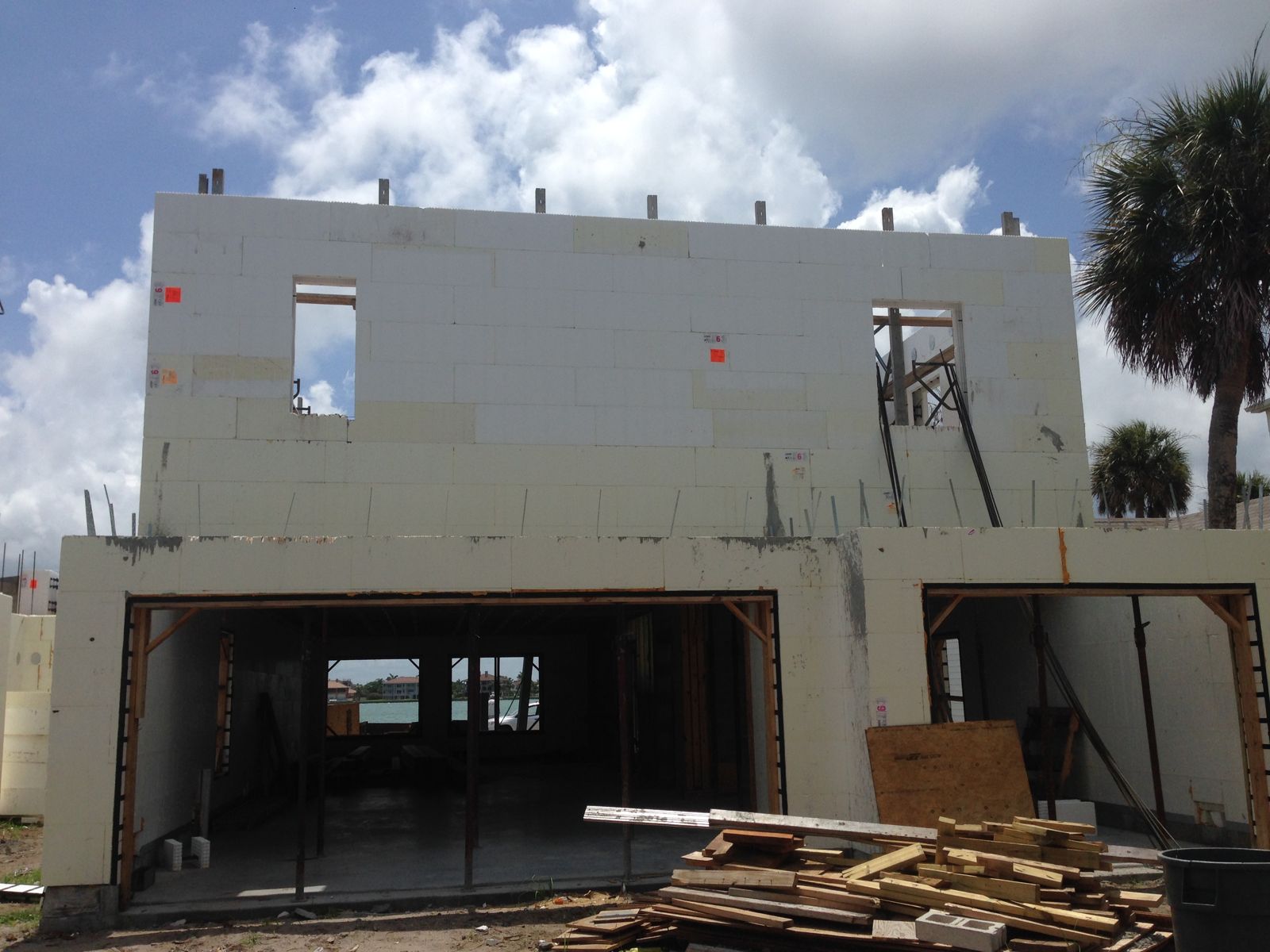
Why It Works
Engineered for the design wind speed
ICF walls are engineered to your site's wind zone under the Florida Building Code — including HVHZ requirements where they apply — with reinforced concrete, not straps and clips.
Debris hits concrete, not sheathing
Flying debris is what opens most homes up in a storm. A reinforced concrete wall is engineered to resist it, protecting the envelope that protects everything else.
Salt air has nothing to eat
Concrete and EPS foam don't corrode, rot, or feed mold. The reinforcing steel lives encased inside the concrete core, away from the salt.
Flood-zone ready
ICF resists moisture intrusion and pairs well with elevated foundations, so the same system that fights the wind works with your flood-zone design.
Insurance in a hard coastal market
Hurricane and fire resistance can lower premiums, and FORTIFIED designation may qualify a home for substantial savings on the wind portion — most valuable exactly where wind premiums hurt most.
Cooling savings where sun is relentless
Coastal exposure means sun and heat with no shade. ICF owners commonly save 30-50% on cooling and energy bills versus wood-frame.
How we build for wind, water, and salt at once
Every coastal project starts with the site's numbers: design wind speed, exposure category, flood zone, and required elevation. The engineering follows from there — core thickness and rebar schedule sized to the wind loads, a continuous load path from the roof connection down through the concrete walls into the foundation, and openings protected with rated windows and doors anchored directly into concrete, the strongest attachment a window can ask for.
In flood zones, we coordinate elevated foundation designs — stem walls and raised systems — so living space sits above the required elevation while the ICF structure above stays continuous and rigid. Below-grade and near-grade foam gets code-compliant termite protection detailing, and finish selections lean on what coastal experience teaches: stucco, stone veneer, brick, and siding all attach to ICF, so durability doesn't cost you the look you want.
What a storm asks of a coastal home
A hurricane tests a house in a sequence: pressure and gusts probe the envelope, debris tries to breach it, and if anything opens, wind gets inside and works on the structure from both sides. The reason concrete homes fare well isn't luck — it's that a monolithic reinforced wall doesn't offer the failure points a framed wall does. There are no sheathing nails to back out, no connections between hundreds of pieces to install perfectly.
For the room your family retreats to when the worst of it passes over, many of our coastal clients add a dedicated shelter designed to FEMA P-320/P-361 criteria, built to resist 250 mph winds. That's a separate scope with its own page: safe room construction.
Where we build on the coast
Our Gulf Coast service area runs from Tarpon Springs south through Naples, covering Tampa Bay, the Pinellas beaches communities, Sarasota, Bradenton, and the coastal corridor between. We'll also consider projects outside that range — if you're on the water somewhere else in Florida, ask.
Coastal work draws two kinds of clients: homeowners building the house they intend to ride out decades of seasons in, and builders who need an ICF shell partner for waterfront lots where the engineering is unforgiving. We serve both, and we'll tell you honestly what your site's wind and flood requirements mean for scope and budget before you commit.
Coastal & Hurricane-Resistant Builds FAQs
Can you build ICF on an elevated foundation in a flood zone?
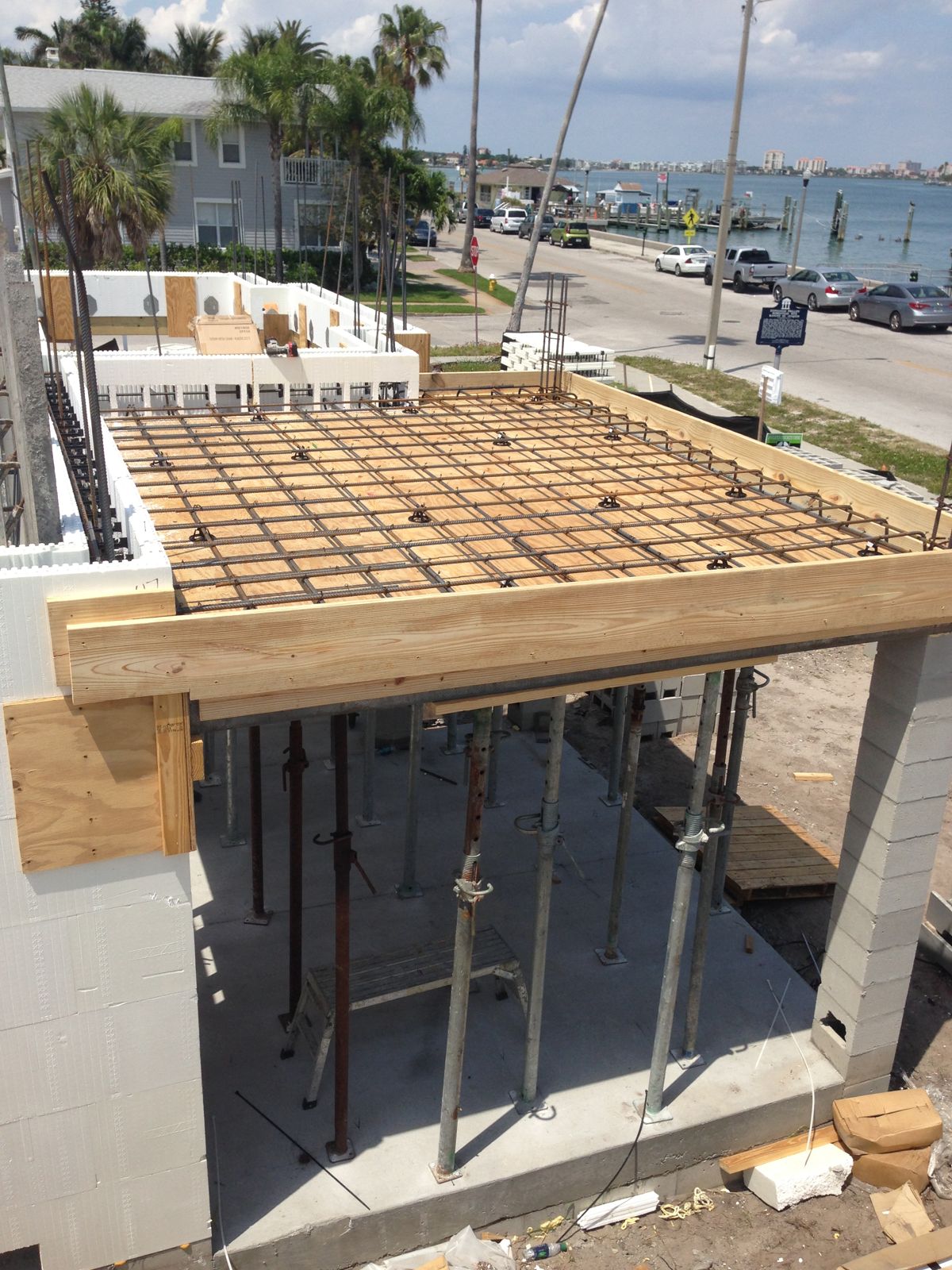
Yes — that pairing is one of ICF's strengths. We coordinate stem wall and elevated foundation designs so living space sits at or above the required flood elevation, with the reinforced concrete ICF structure continuing above. The wall system itself resists moisture intrusion far better than framing.
Does salt air degrade ICF walls over time?
Concrete and EPS foam don't corrode or rot, and the reinforcing steel is fully encased inside the concrete core, protected from salt exposure. The maintenance conversation on a coastal ICF home shifts to finishes, windows, and roofing — the wall structure isn't the vulnerable part.
Do ICF walls meet HVHZ and high wind zone requirements?
ICF walls are engineered per project to the Florida Building Code requirements for your specific site, including High-Velocity Hurricane Zone provisions where they apply. Wind zone, exposure, and opening protection all feed the structural design, and reinforced concrete meets those loads with margin.
What happens to windows and doors — aren't they still the weak point?
Openings are always the envelope's most vulnerable spots, which is why coastal builds get impact-rated windows and doors. In ICF they anchor directly into solid concrete rather than into wood framing, a meaningfully stronger attachment. We coordinate opening protection ratings with your wind zone requirements.
Will a coastal ICF home actually save on windstorm insurance?
Hurricane and fire resistance can lower premiums, and homes earning a FORTIFIED designation may qualify for substantial savings on the wind portion of the premium. Coastal wind coverage is where premiums bite hardest, so the potential matters most here. Your carrier and inspection determine final pricing.
How far inland do you consider a build 'coastal'?
It's less about distance than about your site's numbers — design wind speed, exposure category, and flood zone. A home miles from the beach can still carry coastal-grade wind requirements. We review your survey and site data and build to what your lot actually requires.
Related Services
Safe Room Construction
A room designed to FEMA criteria for 250 mph winds, built into your home. When a major hurricane comes ashore, your...
Learn more →Residential ICF Construction
Custom homes with solid reinforced concrete walls wrapped in continuous insulation. Built for hurricane season,...
Learn more →