“Net zero” is used loosely enough that it is worth starting with what it is not. It does not mean off-grid. It does not mean the house uses no energy. And it is not something you achieve by adding solar panels to a house that was designed without them.
The actual definition
A net zero energy home produces at least as much energy over twelve months as it consumes. The accounting is annual, not momentary. On an August afternoon with the air conditioning running, the house draws from the grid. On a mild bright day in March it exports. Across a year the two balance out.
The grid does the balancing. That is why almost every net zero home is grid-connected rather than off-grid — the utility connection is functioning as a very large, very cheap battery.
Three terms that are not the same
| Term | What it means |
|---|---|
| Net zero energy | Generates as much energy as it uses over a year. |
| Zero energy ready | Efficient enough that adding generation would get it to net zero. The envelope and systems are done; the panels are not. |
| Net zero carbon | A different measure entirely — it counts emissions rather than energy, and can include the carbon in the materials. |
A builder saying “net zero ready” is making a smaller claim than one saying “net zero”. Both can be honest. They are not interchangeable.
What it takes in this climate
Florida changes the problem. In a cold climate the fight is heat loss. Here it is cooling and, just as importantly, humidity. A house that is sealed tight without a plan for moisture is a house with a mould complaint waiting in it.
So the order of work is:
- Cut the load first. Continuous insulation, a genuinely airtight envelope, windows chosen for solar heat gain rather than for a northern winter, and shading that matches the orientation.
- Design the air and moisture. Mechanical ventilation and dehumidification, specified deliberately.
- Size the equipment to the house you are actually building, not to a rule of thumb per square foot.
- Then add generation, sized against what the model says the house will use.
Reversing that order is the common and expensive mistake. Panels are the costly way to fix an envelope that leaks.
How performance gets proved
The HERS Index is the standard scale. A reference house scores 100 and lower is better; 0 means net zero. The rating is produced by an independent certified rater and confirmed with a blower door test and a duct leakage test on the finished house. A model that has not been tested is a prediction. Read more about energy modelling and HERS ratings.
Where the walls come in
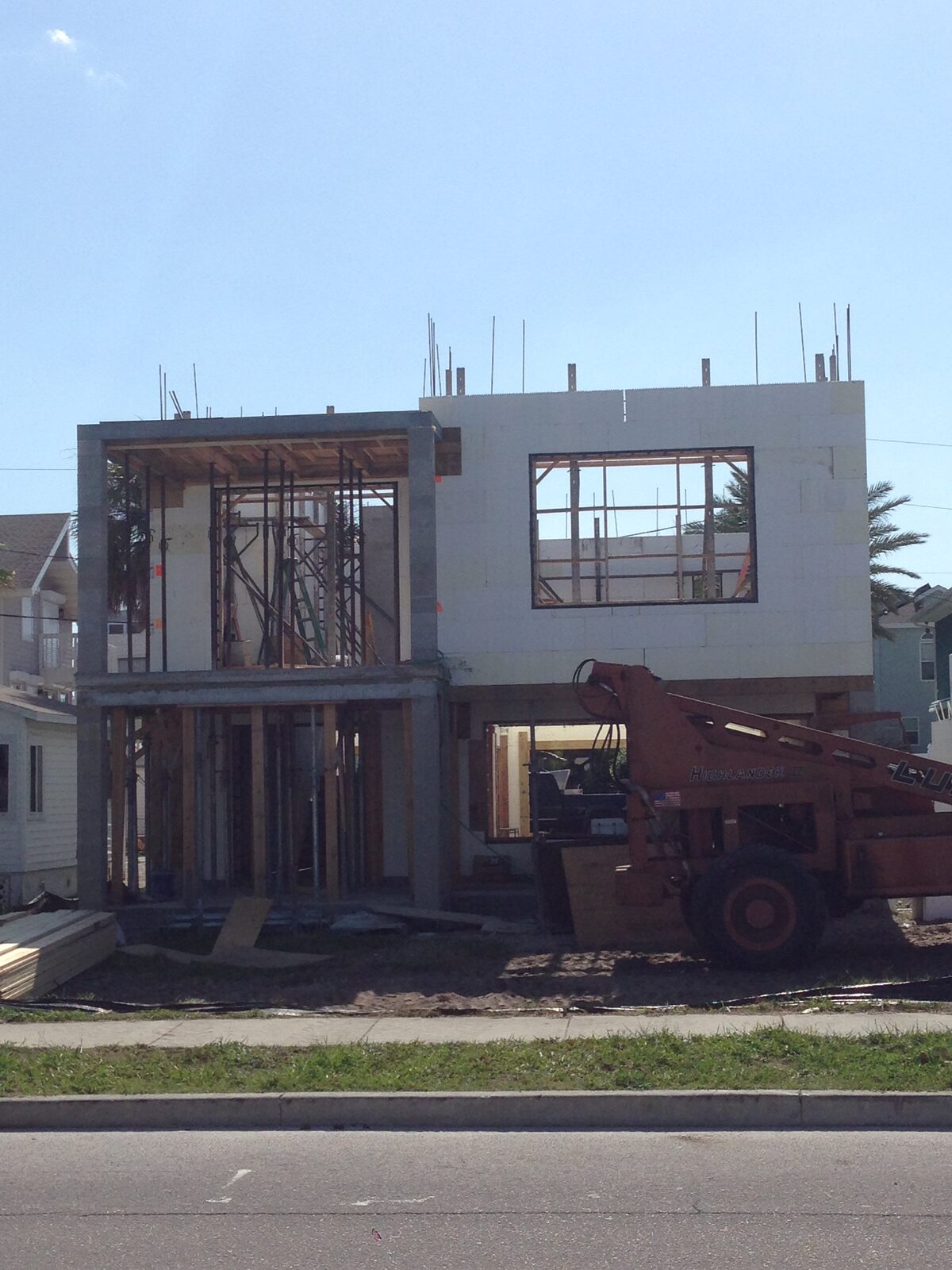
We build with insulated concrete forms because the wall delivers continuous insulation and very low air leakage in one assembly, without depending on perfect taping on a windy site. The storm performance matters in Florida too, but on a net zero project the thermal and air-tightness behaviour is what earns it the job. There is more detail on how we build net zero homes.
Is it worth it?
That depends on how long you intend to own the house and what you pay for power. The honest answer is that it costs more to build and less to run, and the crossover point is specific to your lot, your plan and your utility. Anyone quoting you a universal payback figure is quoting someone else's house.